

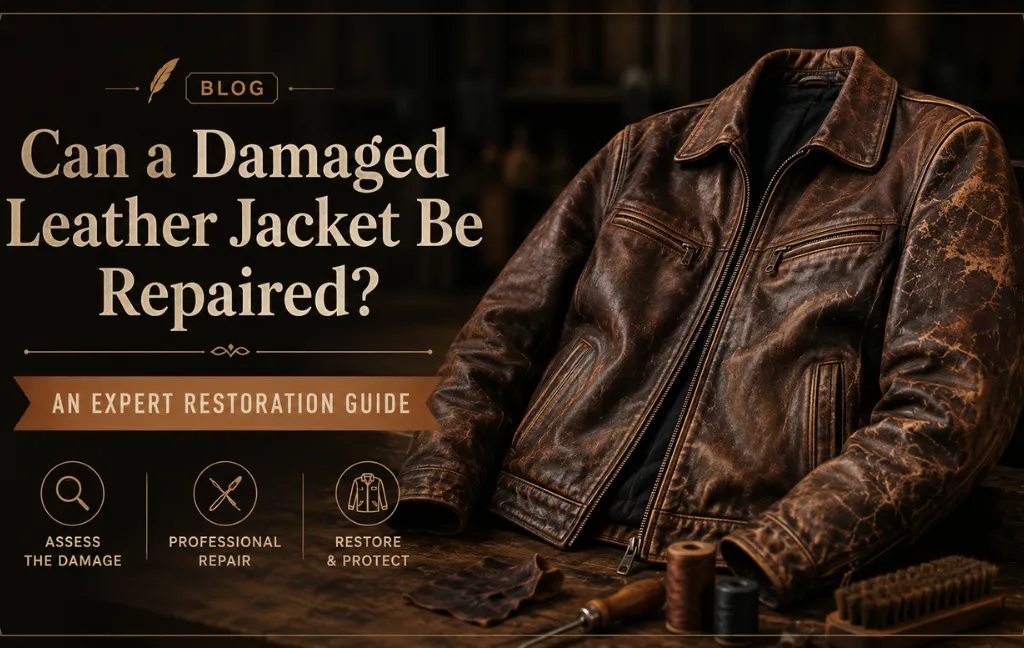
A sudden issue with a metal fence, over the years in dry storage that may include in a garage or basement which in turn may cause a once beautiful piece to look worn out, scuffed or torn. As for what to do about it each Faux leather Jacket owner asks the same question: can it be fixed?
It goes without saying that almost always the answer is yes. We see that real leather which is a natural animal skin made up of dense interlocked collagen fibers as opposed to a delicate woven fabric, has great structural strength. Leather also may be rehydrated, patched, restrung, recolored and matched in grain at a very high degree of accuracy. Also note that the difference between which is simple surface wear and which is serious structural damage is what will determine if a do it yourself repair or a professional leather specialist is the right choice.
Understanding Your Leather: Real vs. Fake Delamination.
Before you attempt any repair it is first to determine if your jacket is indeed made of real animal skin (like lambskin, cowhide, goatskin, or calfskin) or synthetic leather (PU).
- Real Leather Repairability: Natural leather takes in conditioners, is a carrier for color pigments, and is very amenable to special flexible leather fillers. When leather is damaged it is also a property of real leather to repair, reinforce and restore its structure.
- Faux Leather Peeling: If a synthetic or what we call bonded leather jacket begins to break apart in large flakes this is a sign of delamination. The plastic surface has separated from the base fabric. Also unfortunately with synthetic materials once wide scale flaking begins there is no really way to repair it or to recondition the material which makes faux leather a lost cause at that point.
Evaluating Common Types of Damage
Surface Scuffs, Scratches, and Everyday Abrasion
Wear out in high wear areas like the cuffs, elbows, collar, and hemline are what we see most of. What we find is that only the top coat or pigment has come off and the base fiber structure is still there. We may use special color matching leather balms, wax creams, or gentle blend oils for repair.
Dryness, Stiffness, and Surface Cracking
Leather needs moisture and natural lipids to keep its flexibility. Upon drying out which is a result of not being conditioned the fibers shrink, dry out and crack at flex points. Though we may wish for deep set cracks to heal by themselves they can’t, instead we use light flexible fillers which are a fix. Also application of rich lanolin or neatsfoot based conditioning oils will bring back life to stiff hides and also will put a stop to cracks from opening up more.
Rips, Slices, and Punctures
A jagged tear or a clean slice requires structural repair. Woven fabrics unravel at the seam but that is not a issue with leather which when damaged stays put at the edge of the tear. In repair techs’ hands, they use a internal back up of canvas (sub patch) below the pelt, a non rigid type of flexible bonding agent to hold it in place and a color matched liquid leather product to close out the void at the joint.
Broken Zippers, Hardware, and Torn Linings
Mechanical issues do not indicate the health of the leather shell. We see that heavy duty metal zippers, snap buttons, belt buckles and torn polyester or silk pocket linings may be put in by a skilled tailor or cobbler with no change to the jacket’s structure.
How to Do Basic Home Repairs Yourself.
For everyday wear and light damage we have for you at home a professional grade do it yourself solution which is:.
- Step 1: Careful surface clean.
- Wear out the full jacket with a pH balanced leather cleaner and a microfiber cloth.
Step 2: Sub Repair (for small tears only). - If you are treating a fresh puncture get out your tweezers and place a bit of thin denim or canvas into the hole. Apply a small bead of flexible leather glue between the backing cloth and the bottom of the hide, press flat for a few minutes.
- Step 3: Using Color Balm and Liquid Leather.
- Apply a thin layer of the color matched leather repair paste or pigmented cream right to the damaged area.
Step 4: Conditioning and Preservation. - Allow time for the pigment to dry out for 24 hours. For the final step apply a high quality leather conditioner which you work into all of the panels to even out the shine and lock in key moisture.
When to look for professional leather restoration.
While home repair kits do a great job on minor issues but for more serious cases you will need a professional. In the event of the below get in touch with a pro:.
- Extensive Panel Replacement: In the event that a section of the jacket is beyond repair by means of sub-patching a master leatherworker will disassemble the seam, find a matching grain and weight of hide, and in that case mend in a new panel.
- Suede and Nubuck Damage: Suede and nubuck which have open and napped fibers that immediately absorb liquids. For these materials we recommend against the use of standard leather creams and liquid fillers which will damage their velvet finish. As for water rings, oil stains, and ink marks on suede we recommend professional chemical lifting and dry-tumbling.
- Complete Color Restorations: Dyeing out a faded vintage jacket is done by full degassing of the material, application of aniline or pigmented dyes, and we finish with a protective matte, satin or gloss clear coat.
Preventative Maintenance: Preserving Your Investment.
Preventative care is the best repair strategy. We see that which includes proper storage and handling practices is the cause for the great majority of structural failures to be avoided:.
- Use Contoured Wooden Hangers: Never use thin wire hangers for your heavy leather jackets, which they will stretch out and misshape.
- Avoid Plastic Storage Bags: Real leather does well with air flow. In a sealed plastic jacket bag mold grows and fibers decay. For storage use cotton which is breathible.
- Seasonal Conditioning: Once per winter and once before summer storage apply a dedicated leather balm which will maintain soft and crack resistant fibers.
A broken in leather jacket doesn’t belong in the trash. With the right care, quality repair products and professional renovation when needed, your favorite leather jackets may be brought back to perfect condition and worn for years to come.
Frequently Asked Questions:
Q1: How much does it typically cost to professionally repair a leather jacket?
A: Professional repair of leather jackets ranges in price from £10 to £30 which depends on the type and extent of the damage.
Q2: Can peeling faux or PU leather be fixed?
A: Yes at times we can repair peeling of faux or PU leather with patch work, adhesive, or recoloring but for extensive peeling out option may be to replace the damaged panels.
Q3: Will a repaired tear on a leather jacket be completely invisible?
A: Not at all. We can make a tear very hard to see with professional repair which is of that we do, but the results put out do depend on the size of the tear, where it is located, and what type of leather we are working with.
Q4: Can cracked, stiff vintage leather be softened and restored?
A: Yes I see that many times we can bring back old leather which is dry and stiff through professional cleaning and conditioning but we may not completely reverse in very severe cases of cracking.